What Is It Like to Spend a Night with a Nomadic Family?
A night with a nomadic family is simple, quiet and very human. We explain what conditions are really like, how stays are set up and how to be a good guest.
Published · 5 min read

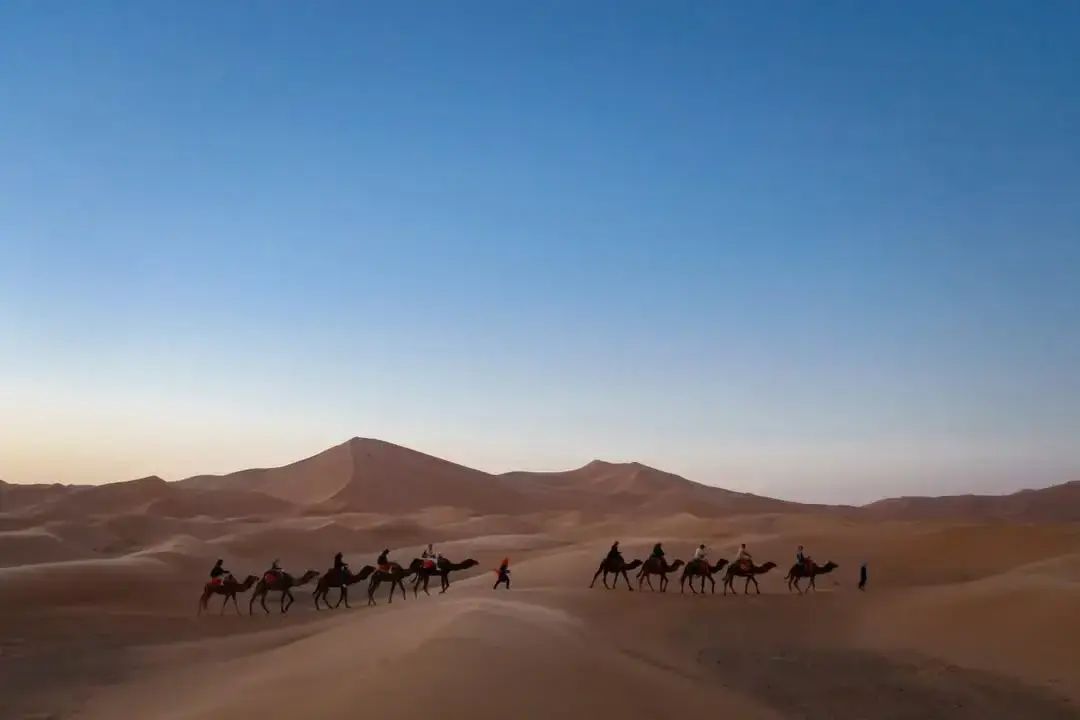
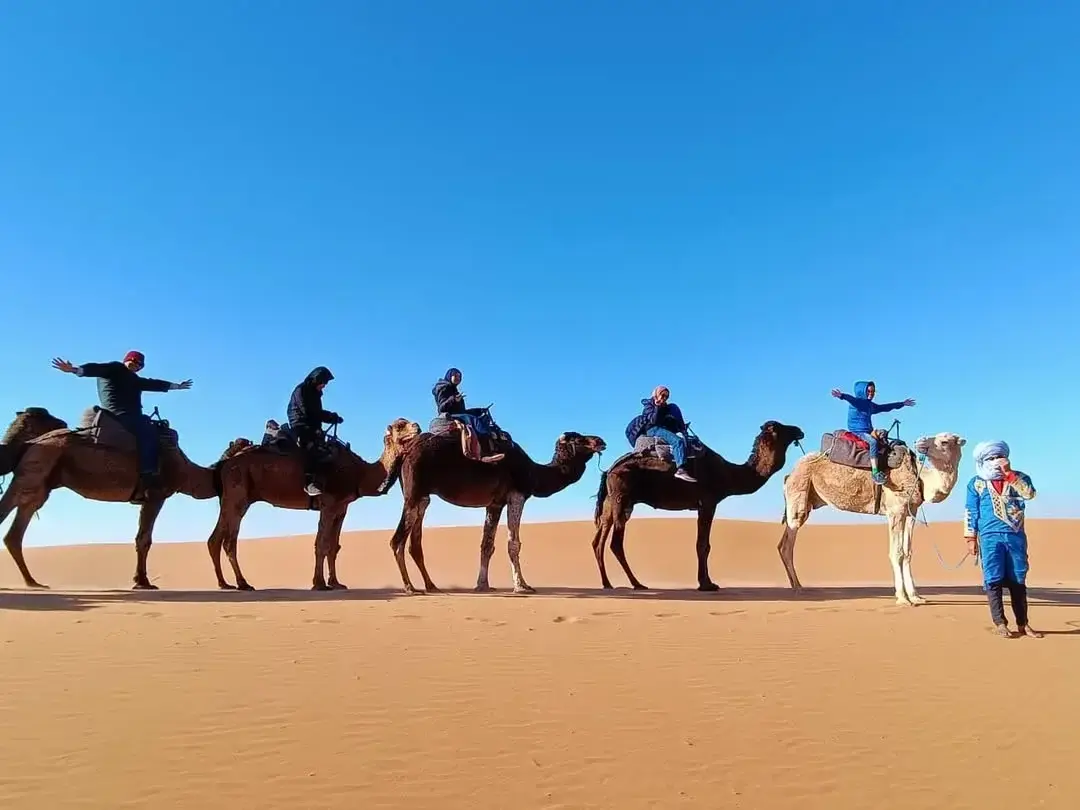
A night with a nomadic family in the Sahara is about as far from a hotel as you can get. Around the Erg Chebbi dunes and the stony plains beyond them, some Amazigh families still live from their goats, sheep and camels, moving with the seasons and the grazing. A few of them welcome travellers to share a meal and a night in their camp.
It isn't a show. You're spending time in someone's home, on their terms. Below we explain what that usually looks like, so you can decide if it's for you.
Who are the nomadic families near Merzouga?
Most families here are better described as semi-nomadic these days. Many have a house in a village and send part of the family and the herd out to seasonal grazing when rain has brought some pasture. The children often go to school, and relatives may work in tourism, trade or farming.
Shelters are usually low tents of woven goat or camel hair, or simple structures of wood, palm fronds and cloth. Daily life turns on water, animals and the weather. Visitors come a long way down that list.
How a stay is arranged
You never just turn up. A respectful stay is set up in advance through a local guide who knows the family and has agreed the visit with them.
- The family decides whether to host, and when. A family event, bad weather or moving camp can all rule a date out.
- The guide normally comes with you, by 4x4 or on foot from the edge of the dunes, depending on where the family is camped.
- The guide translates. Most families speak Tamazight and Moroccan Arabic (Darija). Sometimes a few words of French, rarely English.
- What you pay should include a fair share for the family hosting you. Ask how the family is paid before you book; a good operator will tell you straight.
Only got an afternoon? A shorter visit to a nomadic family over tea gives you a feel for this way of life without staying the night.
What conditions are really like
Be realistic about this part. Conditions are basic, and that's the whole idea.
Sleeping
You'll usually sleep on mattresses or thick blankets on the ground, in a tent shared with your group or a space the family sets aside. Expect sand, animal noises in the night and a very early start, because the household gets up with the light.
Bathroom and water
There's no bathroom. You walk a discreet distance from camp, and washing water is limited; it may have come from a long way off. Bring wet wipes, a small towel and a bag to carry your rubbish back out. You'll need all three.
Food
Meals are simple home cooking: bread baked in the sand or over the fire, a tajine or a vegetable and lentil stew, dates and lots of mint tea. If you have allergies or a strict diet, let the operator know well ahead so the guide can explain it to the family. Bring some snacks of your own as well.
Temperature
The desert goes from one extreme to the other. Summer nights can stay warm and stuffy, while winter nights can get close to freezing. Shelters have no heating or cooling. Pack layers and a warm hat in winter, and plenty of water in summer.
Etiquette: being a good guest
Small things count for a lot here.
- Accept the tea. Tea is how hospitality is spoken. Take at least one glass, even if you don't want the full round.
- Ask before any photo. Ask through your guide every time and take a no gracefully. Many women prefer not to be photographed.
- Dress modestly. Shoulders and knees covered is a sensible rule for everyone.
- Talk to your guide about gifts. Don't hand sweets or money to children. If you'd like to bring something, the guide can tell you what will actually be useful: often tea, sugar or basic food, given to the adults.
- Use your right hand to eat and pass things, and let the family show you where to sit.
- Keep your voice down and your phone away, especially at night.
- Don't wander off after the herd or near water points without asking.
Curiosity goes down well. Ask about daily life, the animals or the seasons and you'll usually end up in a good conversation, with the guide patiently translating.
How your visit supports the family
Hosting guests can bring in a modest, welcome income alongside herding. It helps most when the money goes straight to the family and is fair, when visits aren't too frequent and when guests behave like guests and not spectators.
You're a visitor in someone's home, not an audience. Come with that in mind and you'll be fine.
Who a nomad night suits, and who should pick a camp
A night with a nomadic family tends to suit:
- Travellers who'd rather have conversation and quiet than comfort
- People who can manage without a bathroom, shower or electricity
- Anyone curious about Amazigh life off the usual tourist trail (an Amazigh cultural experience goes well with it)
- Small groups who can roll with whatever the evening brings
It's probably not for you if you need a proper bed, a private toilet, a reliable phone charge or a specific diet, or if you're travelling with very young children who'll struggle with the cold or the dark. A standard desert camp or a luxury desert camp still gives you the dunes and the stars, with more comfort. Our nomad camp page explains the different formats.
Practical summary
- Arranged in advance with a family that's happy to host; the guide translates
- Basic conditions: mattresses on the ground, no bathroom, limited water, simple meals
- Weather: cold nights in winter, warm nights in summer, no heating or cooling
- Bring: layers, headlamp, wet wipes, toilet paper, rubbish bag, water, snacks
- Etiquette: accept tea, ask before photos, dress modestly, check gifts with the guide
- Best for: curious, flexible travellers who care more about people than comfort
Planning your stay
Every family is different, and so is every season, so a stay like this is best planned around your dates and route. Tell us what you're hoping for on the custom tour form, or get in touch with questions. We'll tell you what's realistic before anything is confirmed.
Learn more
Background reading on Wikipedia and more packages on our other site.